
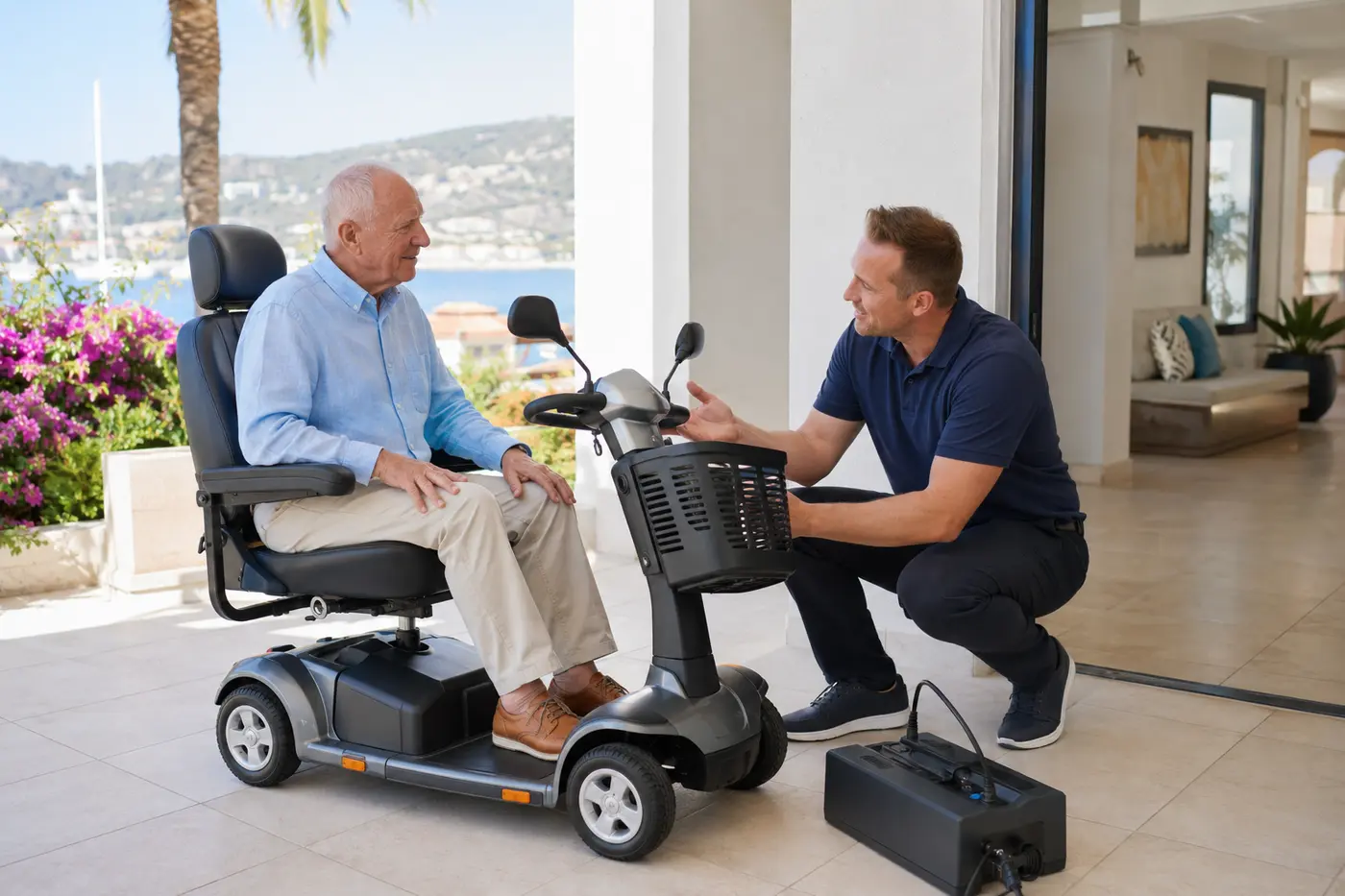
A manual wheelchair may be required occasionally for longer outings or throughout every day of a holiday. In either case, the chair needs to fit the user and the person assisting them. A badly sized chair can cause discomfort, poor posture and difficult transfers surprisingly quickly.
Guide topic: Equipment hire
Choose the correct equipment type
A transit wheelchair has smaller rear wheels and must normally be pushed by a companion. A self-propelled wheelchair has large rear wheels that allow an able user to move independently, but it is wider and usually heavier. Lightweight folding chairs are convenient for transfers, while more supportive models may be needed for longer use. Establish whether removable arms, swing-away or elevating leg rests, attendant brakes or anti-tip bars are required.
Match the equipment to the traveller and accommodation
Provide the user’s hip width, preferred seat width and depth, lower-leg length, weight and any postural or pressure-care requirements. Explain whether the chair must fit a car boot, negotiate a hotel lift or be pushed on gradients and uneven paving. A personal pressure cushion should only be substituted after suitable advice; confirm its dimensions and compatibility with the hired seat.
Information to confirm before booking
- Transit or self-propelled wheel configuration
- Seat width, depth and safe user-weight limit
- Overall and folded dimensions and total chair weight
- Armrest, footrest and leg-rest arrangement
- Attendant brakes, anti-tip equipment and cushion provision
- Delivery, collection and replacement arrangements
Delivery, handover and breakdown support
At handover, sit in the chair and check comfort, posture, footrest height, brakes, tyres and folding catches. Make sure removable components lock securely and ask the provider to demonstrate them. A companion should try pushing and braking the occupied chair on a safe level area before tackling public routes.
Keep the written specification, price, deposit and cancellation terms together with delivery and emergency contact details. Reconfirm the address, room or apartment number and expected arrival time shortly before travel.
Common questions
What is the difference between a transit and self-propelled wheelchair?
A transit chair has small rear wheels and is pushed by another person. A self-propelled chair has large rear wheels that may allow the user to propel themselves, although ability and terrain still need consideration.
How do I choose the correct wheelchair seat width?
Use the traveller’s established chair measurements where possible. The seat must allow suitable clearance without being so wide that posture and propulsion suffer. Seek clinical advice where positioning or pressure care is important.
Will a folding wheelchair fit in a hire car?
Folding alone does not guarantee this. Obtain the chair’s folded dimensions and weight, note whether footrests must be removed, and compare everything with the vehicle’s usable luggage space.
Independent planning guidance reviewed September 2026. Equipment suitability is individual; confirm specifications with the provider and obtain appropriate clinical advice where required.
Before you travel
Reconfirm all important arrangements directly with the airline, hotel, transfer company or equipment provider. Requirements and facilities can change.