
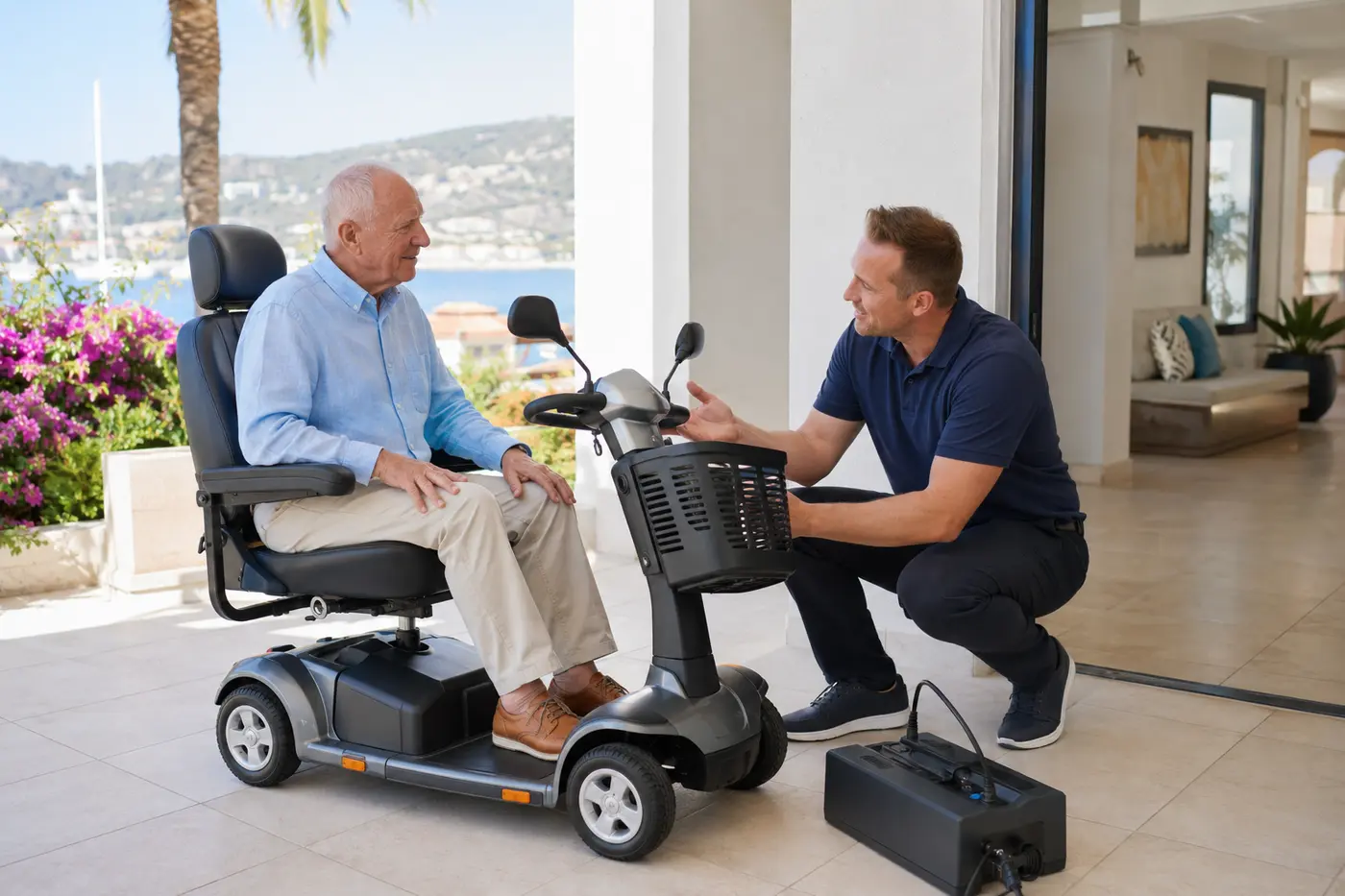
Holiday distances, heat, unfamiliar paving and queues can expose limitations that are less noticeable at home. A correctly selected walking aid may improve confidence and provide planned rest opportunities, but an unsuitable frame or rollator can be difficult to control on slopes and kerbs.
Guide topic: Equipment hire
Choose the correct equipment type
Walking sticks and crutches provide targeted support but require the correct height and technique. Fixed or wheeled walking frames offer a larger base. Four-wheeled rollators usually have hand brakes and may include a seat, back strap and basket; three-wheeled models turn tightly but generally offer a different level of stability and rarely provide a proper seat.
Match the equipment to the traveller and accommodation
Use the traveller’s established aid as the starting point. Confirm handle-height range, safe user weight, grip and brake ability, seat width and height, wheel size and folded dimensions. Consider promenade joints, cobbles, ramps, hotel carpets, lift space and whether the aid must enter a taxi or aircraft cabin. Clinical advice is appropriate when changing the type of aid.
Information to confirm before booking
- Correct handle-height adjustment and hand grips
- Safe user weight and required level of support
- Brake type and the user’s ability to operate it
- Wheel number and size for expected surfaces
- Seat, back strap, basket and walking-stick holder
- Folded size, locking mechanism and total weight
Delivery, handover and breakdown support
Adjust the handles and test the brakes before leaving the delivery point. Check that the folding lock engages, the seat is secure and accessories do not affect stability. Practise stopping and turning on level ground, and never use a rollator as a transport chair unless the exact product is specifically designed and approved for that purpose.
Keep the written specification, price, deposit and cancellation terms together with delivery and emergency contact details. Reconfirm the address, room or apartment number and expected arrival time shortly before travel.
Common questions
Is a three-wheel or four-wheel rollator better for a holiday?
Four-wheel models commonly offer a seat and a broader base, while three-wheel models can be lighter and more manoeuvrable. The user, required support, surfaces and transport arrangements should decide the choice.
Can I sit on any walking frame or rollator?
No. Sit only on a model specifically designed with an approved seat, within its weight limit, with brakes locked and according to the manufacturer’s instructions.
What wheel size is best for resort pavements?
Larger wheels may cope better with joints and uneven surfaces, but wheel size alone does not guarantee suitability. Stability, brakes, user control and the actual route all matter.
Independent planning guidance reviewed September 2026. Equipment suitability is individual; confirm specifications with the provider and obtain appropriate clinical advice where required.
Before you travel
Reconfirm all important arrangements directly with the airline, hotel, transfer company or equipment provider. Requirements and facilities can change.