
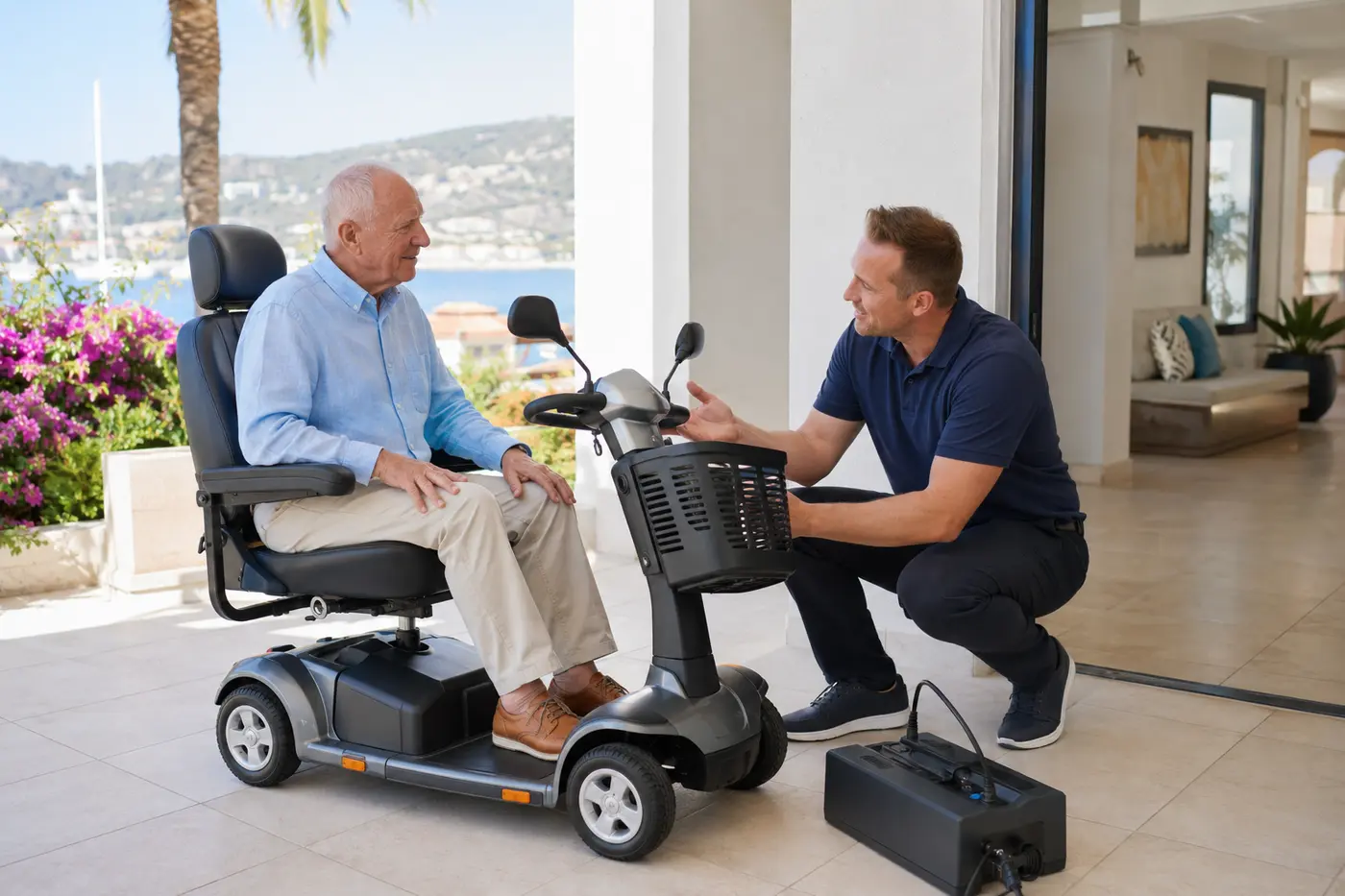
The safest transfer is booked around the traveller, wheelchair and luggage—not merely around the number of passengers.
Choose the transfer method
Decide whether the traveller can transfer into a standard vehicle seat or needs to remain seated in a wheelchair. A wheelchair-accessible vehicle should provide an appropriate ramp or lift, usable headroom, secure wheelchair restraints and a passenger restraint system. “Wheelchair friendly” can sometimes mean only that a folded manual chair fits in the boot, so ask direct questions.
Give the operator full dimensions
Provide the wheelchair or scooter’s length, width, height and weight, including the user where relevant. State whether it folds, whether the backrest or headrest changes the height, and whether there are anti-tip bars, powered leg rests or other projections. Also list suitcases, oxygen equipment, walking aids and the number of companions.
For a hired mobility scooter, decide whether it will be delivered to the accommodation or transported from the airport. Not every accessible taxi can carry a large scooter, and a scooter seat is not a safe passenger seat during travel unless the vehicle and equipment are specifically approved for that use.
Plan the airport meeting
Confirm the meeting point, flight-tracking procedure, waiting-time allowance and telephone number for delays. If airport assistance will bring the traveller to the vehicle, tell both services where the handover should take place. Ask how far it is from arrivals and whether the route is sheltered and step-free.
Wheelchair restraint and passenger safety
Ask the operator to explain how the wheelchair and passenger will be secured. The driver should use the vehicle’s designed restraint system and follow the chair manufacturer’s transport guidance. Lap belts attached only to the wheelchair are not a substitute for an appropriate occupant restraint. If the traveller uses specialised postural supports, discuss them before booking.
Hiring or bringing an adapted car
For vehicle hire, distinguish between hand controls, left-foot accelerators, steering aids, transfer aids, swivel seats, ramps and wheelchair-accessible vehicles. Confirm the exact adaptation, transmission type and driving position. Ask what evidence, licence conditions, deposits and insurance the supplier requires.
Check luggage capacity after the mobility equipment is loaded. A vehicle that seats the right number of people may have no usable space left for suitcases. If the equipment dismantles, confirm who can lift the heaviest part without risk.
Return journeys and local trips
Book the return transfer at the same time and allow for assistance, check-in and traffic. Keep the local operator’s number offline. If planning taxis during the holiday, research availability in the actual resort; accessible vehicles may require advance booking and can be limited during evenings or peak periods.
Transfer booking checklist
- Transfer-in-seat or remain-in-wheelchair requirement stated.
- Equipment dimensions, combined weight and photographs supplied.
- Ramp or lift, headroom and restraint system confirmed.
- Passenger, luggage and equipment capacity checked together.
- Airport meeting point and delay procedure recorded.
- Outbound and return journeys confirmed in writing.
Vehicle standards and availability vary by country and operator. Confirm that the proposed vehicle and restraint arrangements meet the traveller’s needs before paying.
Booking and planning links
Continue planning your holiday
We may earn a commission on qualifying bookings at no extra cost to you. Bookings and payments are handled by the travel provider.
Search results may include nearby properties. Confirm the exact location, room, step-free route and bathroom requirements directly before booking. A listing is not an accessibility assessment.
Before you travel
Reconfirm all important arrangements directly with the airline, hotel, transfer company or equipment provider. Requirements and facilities can change.