
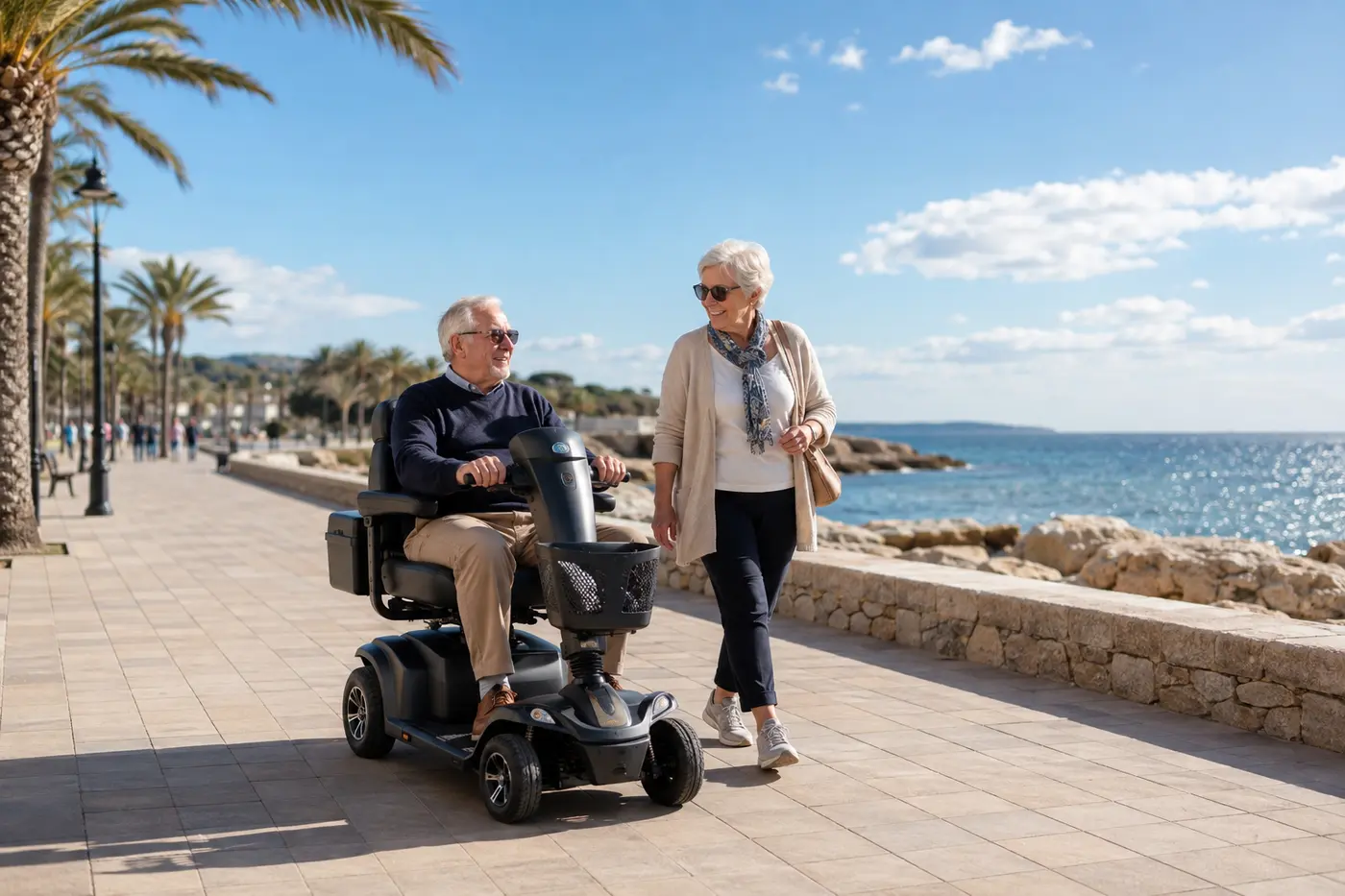
Palma is an elegant island capital where a monumental cathedral, historic lanes, galleries, shops and a long waterfront sit within one urban break. It suits travellers who prefer culture and restaurants to an exclusively beach-based holiday.
What is there to see and do?
The cathedral and Parc de la Mar, the old town, Passeig del Born, Es Baluard and the marina are principal visitor areas. Historic courtyards and markets add interest, although older buildings may have thresholds or limited lift access.
A useful accessible itinerary leaves space for unplanned café stops and rest periods rather than treating every attraction as compulsory. Opening times, accessible entrances, toilets, companion arrangements and mobility-aid policies should be confirmed with the attraction shortly before visiting.
Terrain and getting around
The waterfront and major shopping routes are broadly easier than the rising, cobbled streets behind the cathedral. Distance and summer heat can make the city feel larger than it appears.
Trace both directions of every important journey. A gentle downhill trip to a beach can become a demanding return, while heat, wind, crowds and battery condition can materially reduce comfortable range.
Best areas to stay
Stay near the old town edge for culture, or towards the marina for flatter waterfront routes. Confirm the hotel entrance because converted townhouses often have constrained layouts.
Ask for the precise building and accessible entrance, then check the route to reception, the room, restaurant, pool and public street. Request doorway, lift and bathroom measurements rather than accepting a general accessibility label.
Airport transfers and local transport
Nearest airport: Palma de Mallorca Airport. Airport transfers are short by road. Urban buses and taxis broaden the area available, but wheelchair spaces and adapted vehicles should be checked in advance.
Tell the operator whether the traveller transfers into a vehicle seat or remains in their wheelchair. Provide equipment dimensions and weight together with passenger and luggage numbers.
Mobility equipment hire
Arrange the model around user weight, posture, intended distance, gradients and the accommodation. Confirm delivery, collection, charging, damage terms, breakdown hours and replacement arrangements in writing. Mobility Abroad supplies independent guidance and referral links; bookings and payments are made directly with the selected provider.
Our practical tip
Plan the old town in short sections and identify accessible toilets and shaded rest points before setting out.
Before booking
- Verify the exact hotel room and step-free route.
- Check surrounding gradients using current local information.
- Reserve suitable airport assistance and transport.
- Match hired equipment to the traveller and terrain.
- Reconfirm essential arrangements shortly before departure.
This resort forms part of our Mallorca accessible holiday guide.
Booking and planning links
Plan your stay in Palma de Mallorca
We may earn a commission on qualifying bookings at no extra cost to you. Bookings and payments are handled by the travel provider.
Search results may include nearby properties. Confirm the exact location, room, step-free route and bathroom requirements directly before booking. A listing is not an accessibility assessment.
Plan before you book
Choosing suitable mobility equipment
Match the equipment to the traveller, accommodation and local terrain. Mobility Abroad supplies independent information and does not take bookings or payments.
Equipment checklist